
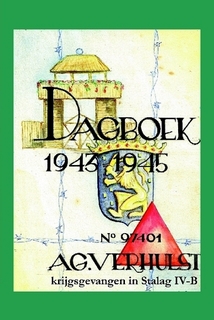
DAGBOEK 1943 - 1945
krijgsgevangen in Stalag IV-B
author: A.G. Verhulst
During World War II, Ad Verhulst was kept as prisoner of war in the German prisoner of war camp Stalag IV-B (Stammlager) in Mühlberg a/d Elbe. On a daily basis, he wrote about his live in the camp, his encounters with college prisoners, his limited contacts with his family at home and how the war in general is experienced in the camp.
The book covers the period between his arrival in the camp in july 1943 and his journey home after liberation by the Russian army in April/May 1945.
Altogether, the book gives an insight view of living in the camp. The book is about the struggle for food, the struggle against diseases, the struggle against suppression and the struggle against boredom.
The book contains 324 pages of text and is for sale on-line and at international bookshops with ISBN 9781445755489.
About my father's diary
My father wrote the diary because he was aware of the historical significance of what happened. It has become a touching story of daily live in the camp, covering all aspects of physical and mental survival. During the first three month, disappointment predominates his writing. Later on, he turns to benefit from the situation by selfstudy and by learning from his fellow-sufferers. He writes extensively about his many talks with fellow sufferers from Holland and England.
The second winter was difficult and made him discouraged by times. It was in this period, that getting food was the prevailing activity, not only for himself, but as much as possible also for his friends.
From February 1945 onwards, he realised that the end came nearer and he collected material for his diary to take home. After the liberation by the Russian he did not wait for the Americans and together with a couple of friends, he left the camp on his way home.

After the war, my father picked up his live according his plans. He also made a start with typing his diary, but not for long. After a short time he packed his material and putted it away. His fellow sufferers alike, he spoke never again about his time in the German prisoner of war camp. They felt collectively misunderstood. Although their fate was in sharp contrast with the Jewish fate, the prisoners of war were imprisoned in threatening and bad circumstances for the only reason of being in the military service at the break out of the war.
Karel Verhulst
